The Parfumsense fragrance journal
How to use reed diffusers: placement, intensity and care
Find a suitable spot, adjust fragrance intensity and care for your reed diffuser. A practical checklist, with the product label as your starting point.
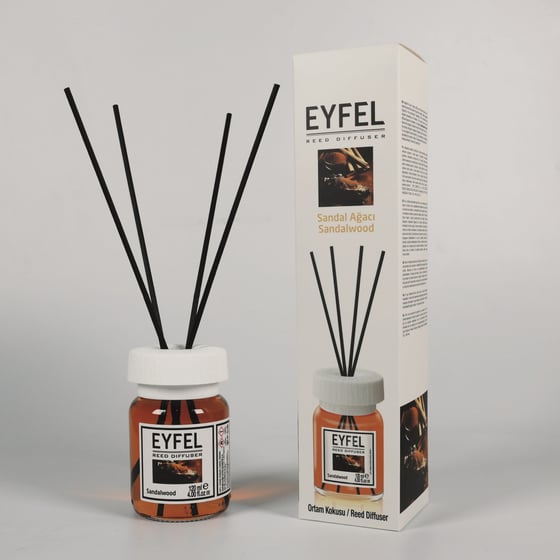
To use a reed diffuser, open the bottle as directed on the label and insert the reeds supplied with it. Stand the bottle upright on a stable, protected surface and follow the product instructions on the number of reeds, turning them and refilling. These instructions can vary by brand and product version.
Choose the spot before opening the bottle
Place the bottle on a flat, stable surface with a protective tray underneath. Leave space around the reeds so that wet ends do not touch walls, curtains or furniture. Choose a spot out of reach of children and pets, out of direct sunlight and away from heat and open flames. These precautions also appear in manufacturer NEOM's instructions.
Think about what happens in that spot. Do you pass bags across it every day, could a cupboard door catch the reeds, or might the bottle be knocked over during cleaning? If so, choose another location. Then read the full label before removing the seal.
Adjust the intensity gradually
For products that allow it, you can adjust intensity by changing the number of reeds. Fewer reeds generally give a gentler diffusion; more reeds can make the fragrance more noticeable. Rebul describes this method of adjustment for its reed diffusers. Do not automatically apply the recommended number to a different product.
Use the supplied reeds and start according to the instructions for your bottle. Assess the scent where you normally sit or walk. Then change one thing at a time, such as the number of reeds permitted by the instructions. This makes it easier to judge what works for you. Never place wet reeds directly on furniture after taking them out.
Do you need to turn the reeds?
Not every product requires the reeds to be turned. Rituals states for its Karma fragrance sticks, for example, that turning is not necessary, but can be done for a more intense scent. NEOM gives different instructions for its product mentioned above. There is no turning schedule that applies to all reed diffusers.
Follow your product's label. If it advises turning the reeds, work carefully over a protected surface and avoid drips. Wash your hands after handling the reeds. Do not automatically turn them more often when the fragrance becomes less noticeable; first check the instructions and the amount of liquid remaining.
A quick care checklist
- Check the location: is the bottle still stable and clear of objects that could catch the reeds?
- Check the bottle: stop using a damaged bottle.
- Avoid spills: wipe up spilled liquid immediately and follow the label instructions.
- Use only suitable refills: check whether the bottle is refillable and which refill and reeds are intended for it.
- Keep the instructions: keep the packaging or a clear photo of the label to hand.
Follow the manufacturer's instructions when replacing reeds and disposing of leftover liquid, too. Do not add water or another fragrance on your own initiative. Still choosing? Read which reed diffusers suit your home or browse reed diffusers at Parfumsense.
Frequently asked questions
How many reeds should I use?
That depends on the product and your preferred intensity. Follow the product instructions; use fewer or more reeds only where they allow it. There is no fixed number that works in every room.
Why can I barely smell my reed diffuser?
Check that you have opened the bottle correctly, are using the right reeds and that there is still liquid inside. Then review the placement and care instructions. If you are still unsure, give the exact product name when asking for advice.
How long do reed diffusers last?
You cannot reliably work this out from the volume in millilitres alone. Refer to any estimate the manufacturer provides for your version and take the conditions of use into account.
Explore these fragrances
 Eyfel reed diffuser – Sandalwood – 120 ml
 Bighill reed diffuser – Big RD3 Velvet – 120 ml
Sources checked on 6 November 2026. Usage advice is general; always follow the label for your product.