The Parfumsense fragrance journal
Choosing perfume online: how to narrow down your options
Make a considered perfume choice online by describing your scent preferences, comparing fragrance notes and checking the exact version and bottle size.
Choosing perfume online starts with three things: knowing which scents you enjoy, reading the full fragrance description and checking the exact version. This helps you create a focused shortlist. A description can help you compare; smelling a fragrance yourself remains the best way to discover whether it suits you.
Describe your scent preferences
Write down two scents you enjoy and one you would rather avoid. They do not have to be perfumes: citrus peel, flowers, herbs or vanilla are useful starting points too. Then make your preference specific, for example: “fresh and spicy, with very little sweetness”.
Also consider when you want to wear the perfume. Are you looking for something familiar for everyday wear, or would you like to explore a different scent style? Fragrance families help you organise your choices, but your own preference is what matters most. Jo Malone London also suggests scent preferences and the occasion as starting points when choosing.
Read fragrance notes together
A fragrance description often divides a scent into top, heart and base notes. These layers help you imagine how the fragrance develops. Look beyond an appealing opening note.
| Layer | What does it describe? | What to ask when comparing |
|---|---|---|
| Top notes | The first impression of the scent. | Does the opening appeal to me? |
| Heart notes | The central character of the fragrance. | Does this style suit my preferences? |
| Base notes | The underlying foundation that may linger longer. | Do I also enjoy the way it settles? |
The Maison Louis Marie scent glossary explains these terms. Use them to guide your choice: one shared note does not tell you how two complete perfumes will smell. Pay particular attention to the other notes it is paired with.
Check the version and bottle size
Read the full product name before ordering. A different version with a similar name may have a different fragrance composition. Check these points:
- Brand and variant: does the product page name the fragrance you want?
- Version: is it an eau de parfum or an eau de toilette, for example?
- Bottle size: how many millilitres does the bottle contain?
- Description: does the described scent character match what you are looking for?
The bottle size tells you how much product you get; it does not predict how strong the scent is. The term eau de parfum alone is not a promise of a specific number of hours of wear either.
Compare a shortlist
Choose two or three candidates from the perfume collection. These Eyfel eaux de parfum all come in 50 ml bottles, but have different described scent profiles:
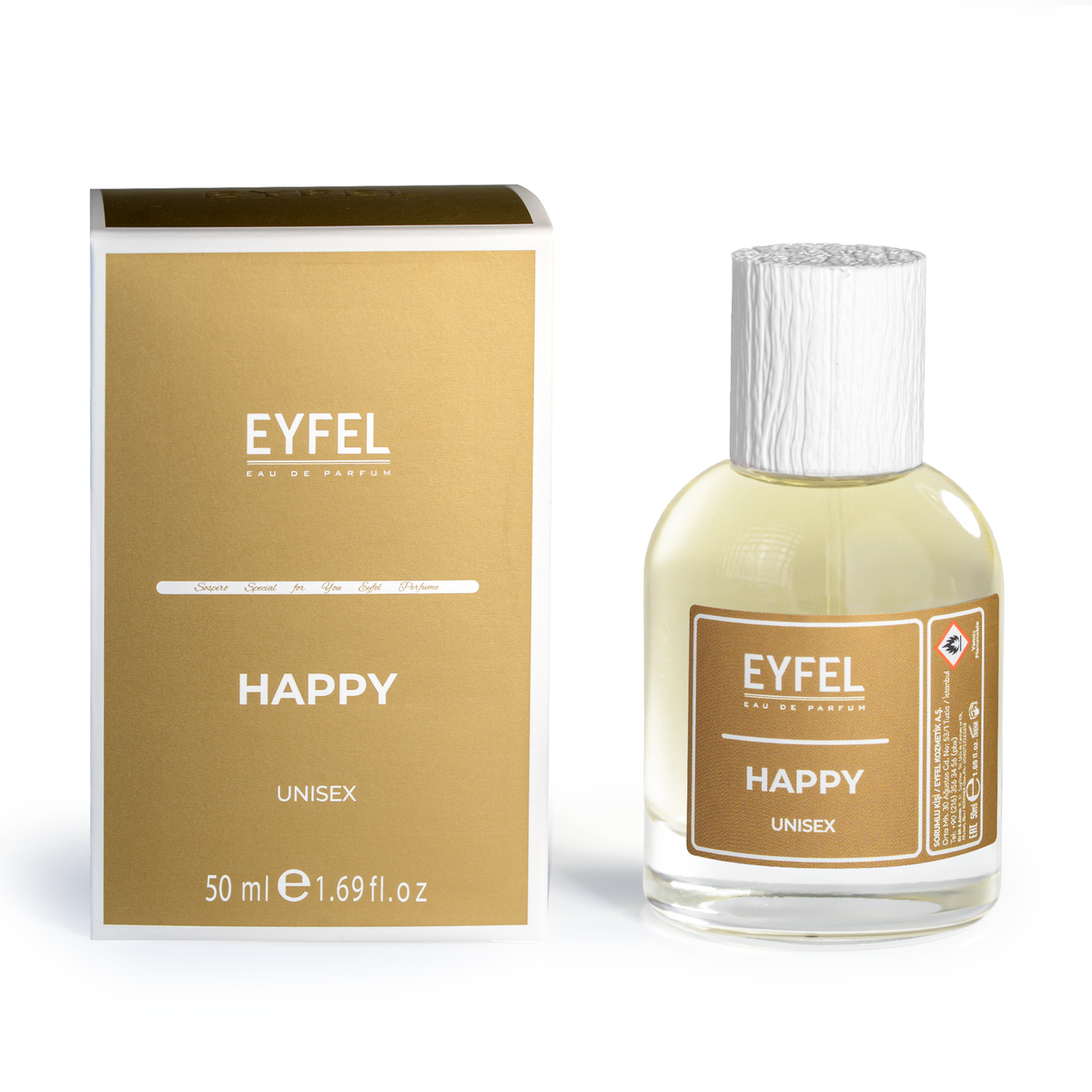
- Happy: citrus and fruit, with vanilla and musk among the base notes.
- Aromatic: a fresh, aromatic and woody style with notes including mint, lavender and woods.
- Candy: a sweet, fruity style with confectionery-like touches, vanilla and caramel.
This comparison follows the product descriptions. Write down one appealing point and one uncertainty for each candidate. This helps you identify any information you still need.
Frequently asked questions
Can I choose a perfume without smelling it?
Descriptions can help you make a focused shortlist. If the scent style is new to you, try the exact version first whenever you have the opportunity.
Are two perfumes with vanilla similar?
Not automatically. Compare the other notes listed and the overall scent character too. Vanilla can sit alongside fresh, floral or distinctly sweet touches, for example.
Should I choose by women's, men's or unisex categories?
Feel free to use those categories to browse, but let the fragrance description and your own taste guide your choice.
Made your choice? Read how to store perfume too.
Terminology checked on 6 November 2026. Product examples based on Parfumsense product information dated 5 November 2026.
Explore these fragrances
 Eyfel Unisex Eau de Parfum – Happy – 50 ml
 Eyfel Men's Eau de Parfum – Aromatic – 50 ml
 Eyfel Women's Eau de Parfum – Candy – 50 ml
Sources checked on 6 November 2026. Usage advice is general; always follow the label for your product.